-
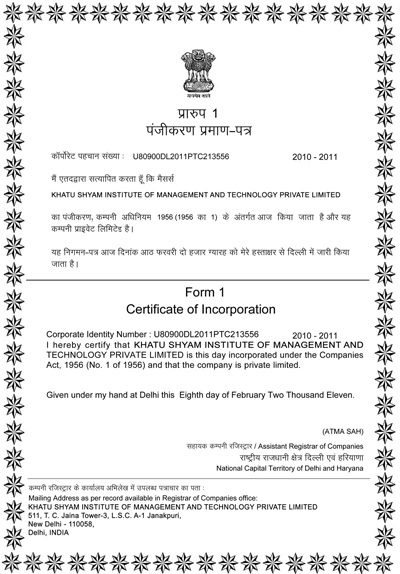 National Registrar Ministry of Corporate (Govt. of India).
 -
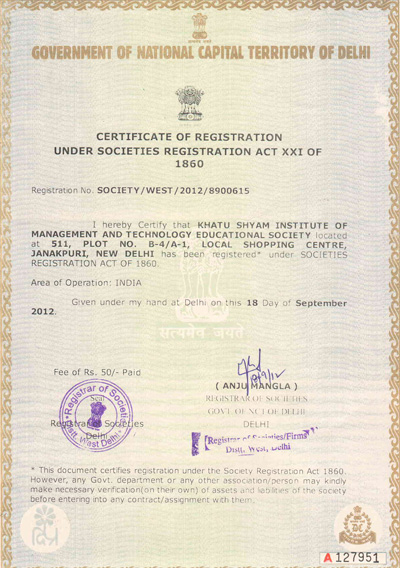 Registrar By NCT, Govt. of Delhi.
 -
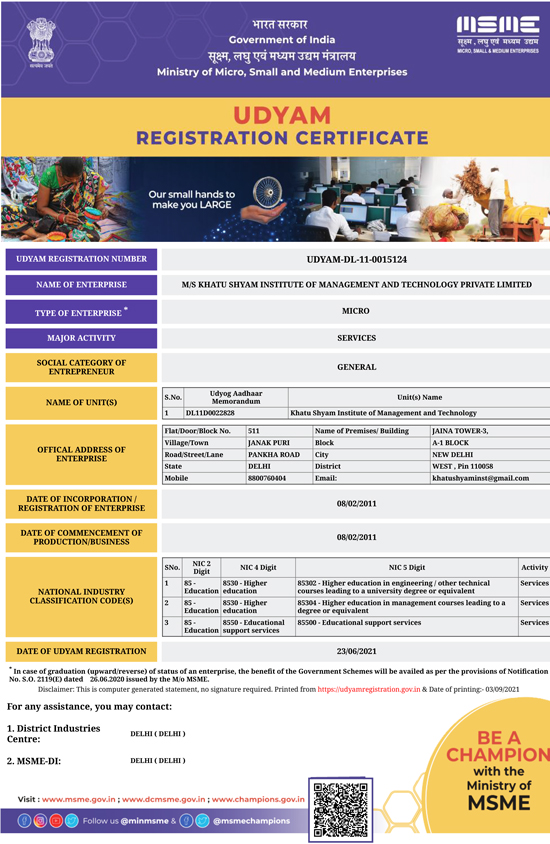 Register By Ministry of MSME, Govt. of India
 -
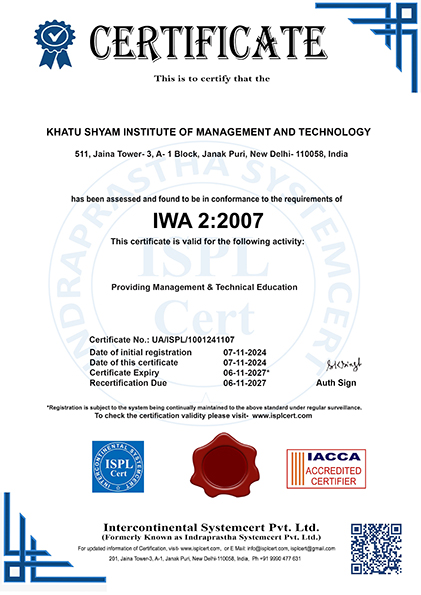 WA 2:2007 Certified By Indraprastha SystemCert Pvt.Ltd is Accredited By Integrated Accreditation Centre For Certification (IACCA) http://www.www.iacca.in
 -
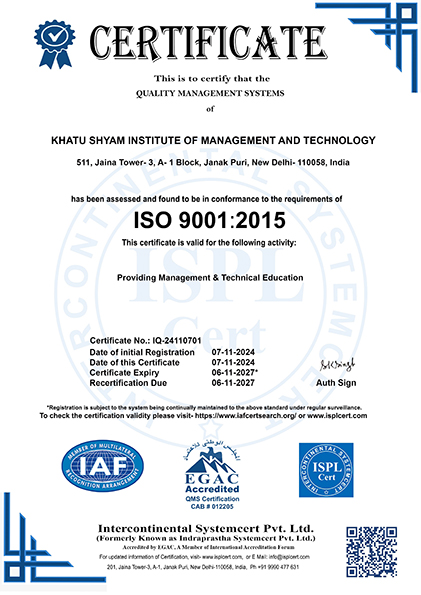 An ISO 9001-2015 Certified By Indraprastha SystemCert Pvt.Ltd is Accredited By Emirates International Accreditation Center (EIAC) https://www.eiac.gov.ae
 -
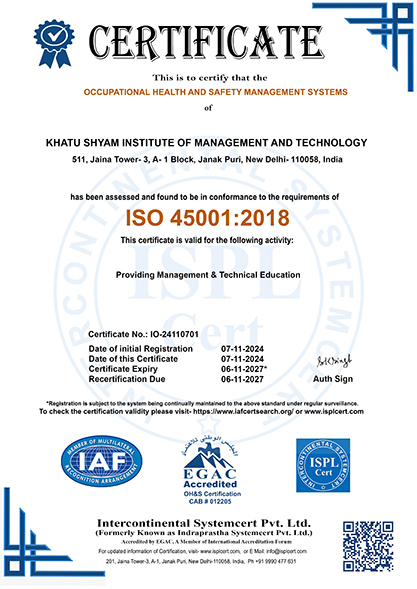 An ISO 45001:2018 Certified By Innovative SystemCert Pvt.Ltd is Accredited By Egyptian Accreditation Council, (EGAC) http://www.egac.gov.eg
 -
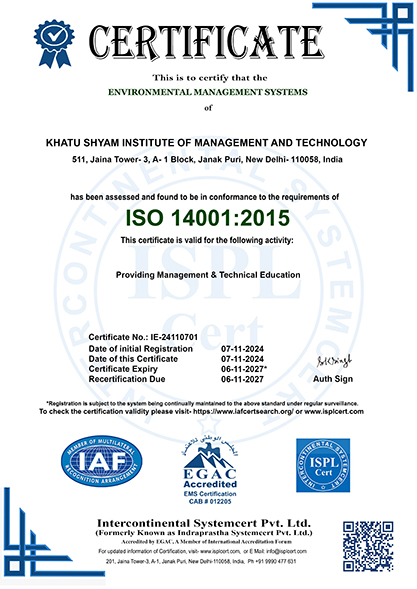 An ISO 14001:2015 Certified By Innovative SystemCert Pvt.Ltd is Accredited By Egyptian Accreditation Council, (EGAC) http://www.egac.gov.eg
Diploma in Metallurgical Engineering for Working Professionals
Khatu Shyam Institute of Management & Technology (KSIMT®) offers the Diploma Program in Metallurgical Engineering through flexible Distance, Online, Correspondence and Work-Integrated learning support for experienced working professionals.
The program provides structured theoretical learning across metallurgy, material science, physical metallurgy, extractive metallurgy, heat treatment, mineral processing, iron and steel making, powder metallurgy, corrosion engineering, welding metallurgy, metal forming and material characterization.
It is designed for professionals already working in steel, metals, foundries, manufacturing, heat treatment, welding, mineral processing, quality control, inspection, plant operations and related industrial environments who want to continue education while managing existing employment.
Eligible professionals across India, UAE, Dubai, Saudi Arabia, Kuwait, Qatar, Oman, Bahrain and other overseas locations can explore the program according to applicable qualification and experience requirements.
KSIMT® is ISO Certified and operates under the guidelines of the Government of India and the Government of Delhi.
Work + Study = Success
Metallurgical Engineering Diploma for Working Professionals
Metallurgical Engineering plays an important role in industries dealing with metals, alloys, steel, material processing, heat treatment, welding, corrosion, manufacturing and quality control.
Professionals working in these environments often gain valuable practical knowledge through years of industrial experience but may find regular daily classroom education difficult because of shift duties, plant operations, production responsibilities or project schedules.
The KSIMT® Diploma in Metallurgical Engineering provides a flexible theoretical learning structure designed around these practical requirements.
Program Highlights
- Distance, Online and Correspondence learning support
- Work-Integrated education model
- 100% theoretical study
- Digital e-books
- No regular daily classroom attendance
- No regular campus dependency
- No regular laboratory, furnace or plant attendance
- Flexible study alongside employment
- Student Login after admission
- Digital ID Card
- Examination and result support
- India and overseas accessibility
Who Should Explore This Program?
The Diploma in Metallurgical Engineering primarily focuses on experienced professionals working in metallurgy, materials, metals and related industrial fields.
It may be relevant for:
Metallurgical Technicians • Steel Plant Personnel • Foundry Personnel • Heat Treatment Professionals • Metal Production Personnel • Welding Personnel • Quality Control Personnel • Material Inspection Personnel • Manufacturing Professionals • Mineral Processing Personnel • Plant Operations Personnel
The selected program should remain relevant to the applicants previous qualification and professional experience.
Eligibility & Duration
Regular Entry
Qualification: 10th Grade or applicable equivalent educational background
Duration: 3 Years
Lateral Entry
Candidates with an applicable 2-Year Engineering ITI in a relevant field may be considered for Lateral Entry.
Duration: 2 Years, subject to applicable eligibility requirements.
Working Professional Requirement
Applicants should have:
- Applicable previous educational qualification
- Minimum 3 years of relevant work experience
- Professional experience in the same or related field
- Applicable educational and professional documents
Regular or Lateral Entry is determined after reviewing previous qualification, relevant professional experience and applicable documents.
Diploma in Metallurgical Engineering Syllabus
The program follows a 21-subject theoretical structure covering core engineering fundamentals and important areas of Metallurgical Engineering.
First Year
- Engineering Mathematics-I
- Engineering Physics
- Engineering Chemistry
- Fundamentals of Metallurgy
- Material Science
- Technical Communication
- Environmental Studies
Second Year
- Mechanical Behavior of Materials
- Physical Metallurgy
- Extractive Metallurgy of Copper
- Engineering Thermodynamics
- Heat Treatment
- Manufacturing Processing
- Mineral Processing
Third Year
- Ironmaking and Steelmaking
- Powder Metallurgy
- Corrosion Engineering
- Welding Metallurgy
- Metal Forming
- Surface Engineering for Wear Resistance
- Characterization of Materials
Subject arrangement may be updated according to applicable academic requirements.
What Will You Learn?
Instead of studying metallurgy only as individual processes, the program develops theoretical understanding across interconnected material and industrial concepts.
Key learning areas include:
Material Science • Physical Metallurgy • Extractive Metallurgy • Heat Treatment • Mineral Processing • Ironmaking & Steelmaking • Powder Metallurgy • Corrosion Engineering • Welding Metallurgy • Metal Forming • Surface Engineering • Material Characterization
For experienced professionals, structured theoretical learning can complement practical knowledge already developed through workplace exposure.
Metallurgical Knowledge Across Industrial Applications
Metallurgical Engineering concepts are relevant across industries where the selection, processing, production, treatment, inspection and performance of metals and materials matter.
These may include:
Steel Industry • Metal Manufacturing • Foundries • Automotive Manufacturing • Heavy Engineering • Heat Treatment • Welding • Mineral Processing • Quality Control • Material Inspection • Corrosion Management • Production Plants
The program provides theoretical education that can support professionals in strengthening knowledge relevant to their existing technical background.
Continue Working While You Study
A working professional may already be managing monthly expenses, family responsibilities, shift duties, production schedules, plant operations and career commitments.
Leaving employment solely to attend regular daily classes may not be practical.
KSIMT® follows a flexible theoretical learning model that allows eligible professionals to continue education while remaining engaged in their existing careers.
Applicable study material is provided through digital e-books, helping professionals manage learning according to their available time.
The model can also reduce dependency on:
- Regular daily campus travel
- Relocation for study
- Accommodation near a campus
- Fixed classroom schedules
- Regular laboratory or furnace attendance
- Extended time away from employment
This makes continued education more manageable for time-bound working professionals.
100% Theoretical Learning Through Digital E-Books
The Diploma in Metallurgical Engineering follows a theoretical education model.
Applicable learning material is provided digitally through e-books according to the program structure and selected subjects.
Students can manage:
Subject-Wise Theoretical Study • Flexible Self-Study • E-Book Learning • Academic Requirements • Applicable Examinations
The learning model does not depend on regular classroom, laboratory, foundry, furnace or plant attendance.
Course Fee
Total Diploma Program Fee: 55,500/-
The applicable fee includes:
- Admission Fee
- Digital Study Material
- Examination Fee
- Digital ID Card
- Applicable Taxes
Eligible students may have applicable 3-month or 6-month EMI options according to admission terms.
For working professionals, total value should also be considered alongside possible savings related to regular travel, relocation, accommodation and time away from employment.
Compare the Complete Student Value
When selecting an institution, fee alone should not be the only consideration.
A working professional should also compare:
Program Relevance • Fee Transparency • Learning Support • E-Books • Examination Process • Examination Result • Verification • Academic Documents • Student Services • Post-Completion Support
KSIMT® focuses on maintaining a structured academic and administrative process throughout different stages of the student journey.
Student Access After Admission
After applicable admission formalities are completed and admission is confirmed, students receive applicable access to:
- Student Login
- Digital ID Card
- Digital e-books
- Program and academic information
- Examination information
- Student-support guidance
This provides students with a clear academic and administrative starting point after admission.
Examination, Result & Verification
The Diploma in Metallurgical Engineering follows an applicable theoretical examination and assignment-based academic process.
Students receive applicable information regarding:
Examination Schedule • Academic Instructions • Theory-Based Question Papers • Assignments • Submission Requirements • Examination Result
Applicable completed examination assignments or answer submissions are submitted according to officially communicated KSIMT® procedures.
KSIMT® also provides an applicable Online Examination Result / Verification facility for student records.
Where documents are intended for a specific employer, institution, professional purpose or overseas authority, candidates should verify the applicable requirements according to their intended use.
Metallurgical Engineering Diploma in India & Gulf Countries
KSIMT® supports eligible working professionals across India and overseas.
Professionals working in UAE, Dubai, Saudi Arabia, Kuwait, Qatar, Oman and Bahrain can explore the Diploma in Metallurgical Engineering while continuing existing overseas employment.
The flexible learning model may be particularly practical for professionals working in:
Steel Plants • Foundries • Metal Processing • Manufacturing • Welding • Heat Treatment • Mineral Processing • Quality & Inspection • Plant Operations
Eligible professionals working in other overseas locations can also enquire regarding applicable admission and documentation requirements.
Admission Process
1. Share Your Profile
Provide your previous qualification, relevant work experience, current professional role and location.
2. Profile & Eligibility Review
Your educational and professional background is reviewed according to applicable Diploma requirements.
3. Entry-Level Confirmation
Regular or Lateral Entry is determined according to previous qualification, experience and applicable requirements.
4. Submit Documents
Provide applicable educational, professional and identification documents.
5. Complete Admission
Complete applicable documentation and fee formalities through authorised KSIMT® channels.
6. Receive Student Access
After admission confirmation, receive applicable Student Login, Digital ID Card, e-books and academic information.
7. Begin Theoretical Learning
Continue subject-wise theoretical education while managing existing professional responsibilities.
Student Support at KSIMT®
KSIMT® provides applicable academic and administrative support throughout different stages of the student journey.
Support may include:
- Admission and program guidance
- Digital e-books
- Student Login
- Digital ID Card
- Examination guidance
- Examination Result
- Online Result Verification
- Academic document guidance
- Transcript Services
- Verification Letter
- Migration
- Consolidated Marksheet
- Medium of Instruction Letter
- Provisional Documentation
- Available Apostille and Attestation guidance
Support is designed to continue beyond the initial admission stage.
Frequently Asked Questions
Is the Diploma in Metallurgical Engineering designed for working professionals?
Yes. The program primarily focuses on experienced professionals working in metallurgy, steel, metals, manufacturing and related industrial fields.
How much relevant work experience is required?
Applicants should have minimum 3 years of relevant work experience in the same or related field.
What is the program duration?
Regular Entry is 3 years. Eligible candidates may be considered for 2-year Lateral Entry according to applicable requirements.
Can an ITI holder apply for Lateral Entry?
Candidates with an applicable 2-Year Engineering ITI in a relevant field may be considered, subject to profile and document review.
Is this a theoretical program?
Yes. The Diploma follows a 100% theoretical learning model supported through digital e-books.
Is regular laboratory, foundry or plant attendance required?
The theoretical learning model does not require regular laboratory, foundry, furnace or plant attendance.
What subjects are included?
Major subjects include Material Science, Physical Metallurgy, Extractive Metallurgy, Heat Treatment, Mineral Processing, Ironmaking & Steelmaking, Powder Metallurgy, Corrosion Engineering, Welding Metallurgy, Metal Forming and Material Characterization.
What is the total course fee?
The total Diploma Program Fee is 55,500/-, including applicable admission, digital study material, examination, Digital ID Card and taxes according to program terms.
Can UAE and Gulf working professionals enquire?
Yes. Eligible professionals working in UAE, Dubai, Saudi Arabia, Kuwait, Qatar, Oman, Bahrain and other overseas locations can enquire remotely.
Is online result verification available?
KSIMT® provides an applicable Online Examination Result / Verification facility for student records.
Continue Working. Continue Building Your Metallurgical Knowledge.
Professional experience in steel, metals, materials and industrial operations takes years to build.
The Diploma in Metallurgical Engineering provides eligible working professionals with structured theoretical learning related to metallurgy and materials while allowing them to remain engaged in their existing careers.
Khatu Shyam Institute of Management & Technology (KSIMT®)
511, Jaina Tower-3, A-1 Block, Janak Puri, New Delhi – 110058
Call / WhatsApp: +91 9953631363
Website: www.ksimt.ac.in
Email: khatushyaminst@ksimt.ac.in
KSIMT® | Work + Study = Success
Course Offered By: KSIMT under autonomous mode through distance education
Request a Callback
Admission Guidance for Working Professionals With 3+ Years of Relevant Work Experience